Foraging on Crown Land in Canada: Mostly Yes — With Real Conditions
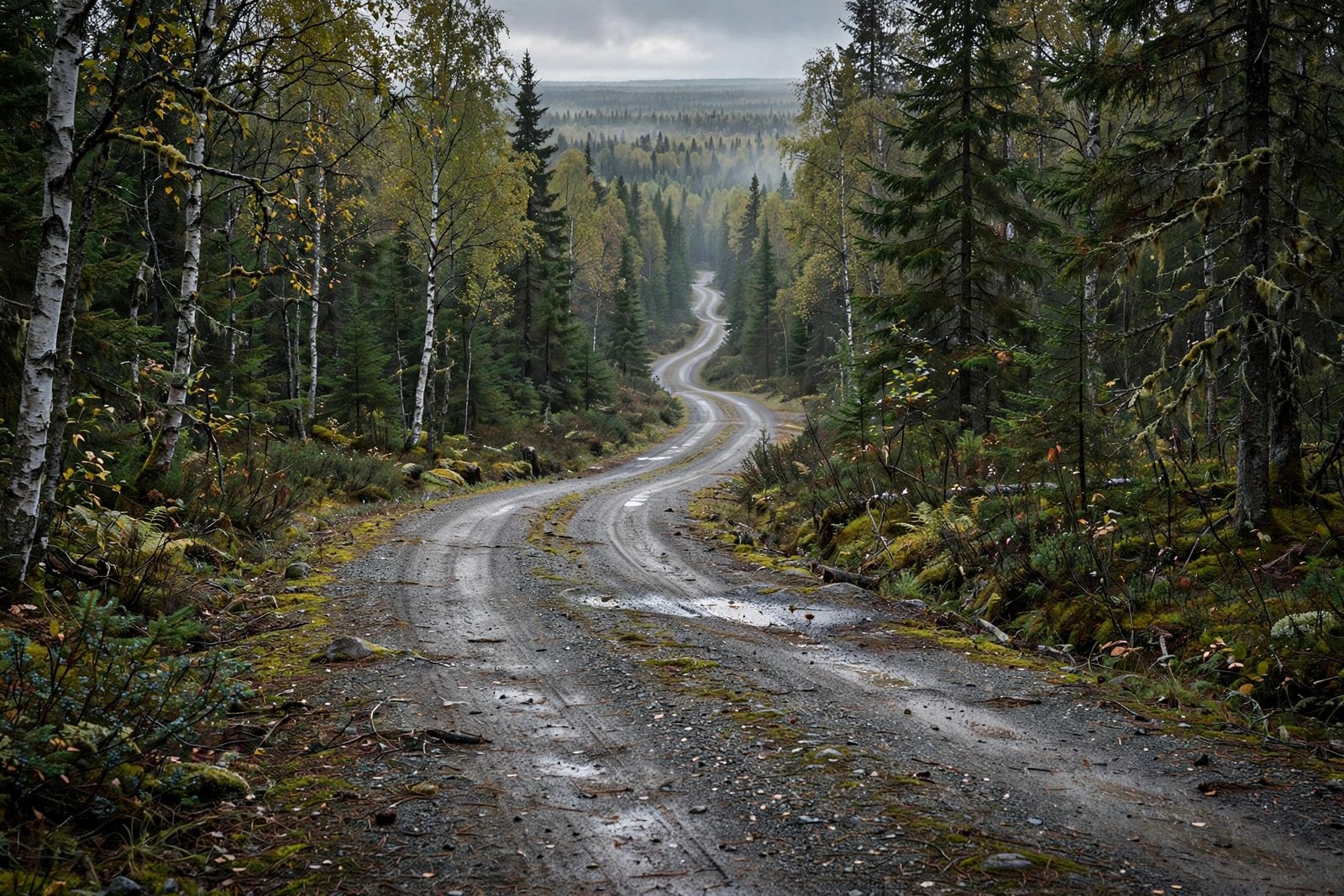
If Canadians forage legally anywhere, it’s mostly here. The great majority of this country’s land area is Crown land — land held by the Crown, provincially or territorially in most of the country, federally in specific places — and unlike the parks, it is working, living, multi-use land. Harvesting happens on it by design: timber, grazing, trapping, and, yes, people picking food for their own tables.
But “mostly yes” is doing real work in that sentence. This page covers what Crown land actually is, the two provinces whose personal-use picking we’ve verified against their own official guidance, and the conditions that can turn a yes into a no on a specific piece of ground. It’s a plain-language summary, not legal advice.
What Crown land is — and isn’t
Crown land is not “empty land” and not automatically public in the way a sidewalk is public. It’s land under active management, and other interests may already be attached to the parcel in front of you: a grazing lease, a timber tenure, a trapline, a guide-outfitter territory, a community watershed. That’s why the sentence “it’s Crown land, so I can pick” is only ever the start of the check. The full picture sits in Is It Legal to Forage in Canada?.
It’s also worth knowing the contrast: provincial parks are carved out of this landscape into a stricter category, which is why the rules can change at a boundary sign. We cover that in Foraging in Provincial Parks: Three Answers, Depending on the Province.
British Columbia: documented yes, with a real exclusion list
BC publishes the clearest statement in the country: mushroom picking is allowed on provincial Crown land without a permit. The same provincial guidance draws the boundaries around that yes, and they’re specific. Picking is not allowed in national or provincial parks, in conservation lands including Wildlife Management Areas, on Department of National Defence land, or in protected areas such as ecological reserves. Permission is required on leased Crown land, on private land, and on First Nations reserve land.
BC’s guidance also carries a piece of fieldcraft worth copying everywhere: know where the boundaries are before you go, especially around parks, reserves, and recently burned areas, so you don’t wander into a restricted area with a full basket and a genuine misunderstanding.
Nova Scotia: documented yes, at small scale
On the other coast, Nova Scotia’s official Crown land guidance lists what you can do on Crown lands without a permit — and the list includes small-scale foraging of plants and fungi, excluding timber, by hand for personal use. Small-scale foraging of seaweed by hand for personal use appears alongside it.
Every qualifier in that sentence is load-bearing. Small-scale. By hand. For personal use. The same guidance framework is clear that resale is not permitted, and Nova Scotia’s Crown land pages add that plants may not be dug up and removed — the difference between picking berries and extracting the plant is the difference between the allowed activity and a prohibited one.
The conditions that apply almost everywhere
Even where personal-use picking is documented, a specific spot can carry its own no:
- Protected designations. Ecological reserves, protected areas, and conservation lands layered over Crown land carry their own no-take rules, as BC’s list shows.
- Leases and tenures. Leased Crown land is someone else’s working land for the lease’s purposes; BC names it explicitly as permission-required.
- Closures. Areas can be closed for sensitive resource values or public safety, including around wildfire activity.
- Species protections. A plant can be off-limits because of what it is, not where it grows — protected and at-risk species rules apply on top of land rules.
- Commercial vs. personal. The moment picking becomes selling, you’re in different law: food-safety requirements and permits. BC’s documentation notes there is no formal approval process for wild mushroom sales and that vendors remain responsible under the federal Food and Drugs Act — a landscape to enter carefully, with professional advice, not a blog post.
How to check a specific parcel
For ground you actually intend to pick on, go one level deeper than this page: provinces publish Crown land maps and atlases that show designations, leases, and protected overlays for real parcels. Check the parcel, not just the province. Our Where Can I Pick? checker gives the verified province-and-land-type answers we’ve published so far and links the governing source for each.
Etiquette is part of the permission
Crown land foraging works because it’s shared. The unwritten terms are the same everywhere: take a modest share of what’s there, leave the patch standing and producing, don’t rake or dig up what you’re harvesting from, and leave no trace that you were there at all. The legal yes lasts exactly as long as the land can absorb the use — every forager who treats Crown land gently is voting to keep it.
This page summarizes the Province of British Columbia’s mushroom picking guidance and Nova Scotia’s official Crown lands guidance, both linked below. Those documents govern — for any specific place you plan to pick, the provincial source is where the final answer lives.
Questions
Can I forage on Crown land in Canada?
Often yes, for personal use — British Columbia allows mushroom picking on Crown land without a permit, and Nova Scotia's guidance allows small-scale foraging of plants and fungi by hand for personal use without a permit. But leases, protected designations, and closures can change the answer for a specific parcel.
Does 'Crown land' on a map mean picking is allowed?
No. Crown land can be leased, under tenure, designated as a protected area, or closed. The label is the start of the check, not the end of it.
Can I sell what I pick on Crown land?
Personal use is not commercial use. Selling wild foods engages food-safety law and permits; British Columbia documents no formal approval process for selling wild mushrooms, and vendors remain responsible under the federal Food and Drugs Act.