A Guide to Ethical Discovery
Ethical Practices
Foraging begins long before the basket comes out. Know whose land you are on and whether picking is allowed there — national parks are a hard no, provincial parks vary by province, and Crown land, municipal land, and private land each carry their own rules. Take only what you will use, leave the patch healthier than you found it, and never strip a slope: the mushrooms you leave are next year’s flush, and the forest’s own pantry besides.
Cut or twist gently, carry your harvest in a woven basket so spores fall as you walk, and brush off dirt in the field. Clean your boots and gear between forests so you are not the vector that moves invasive seeds from one watershed to the next.
Identification Tips
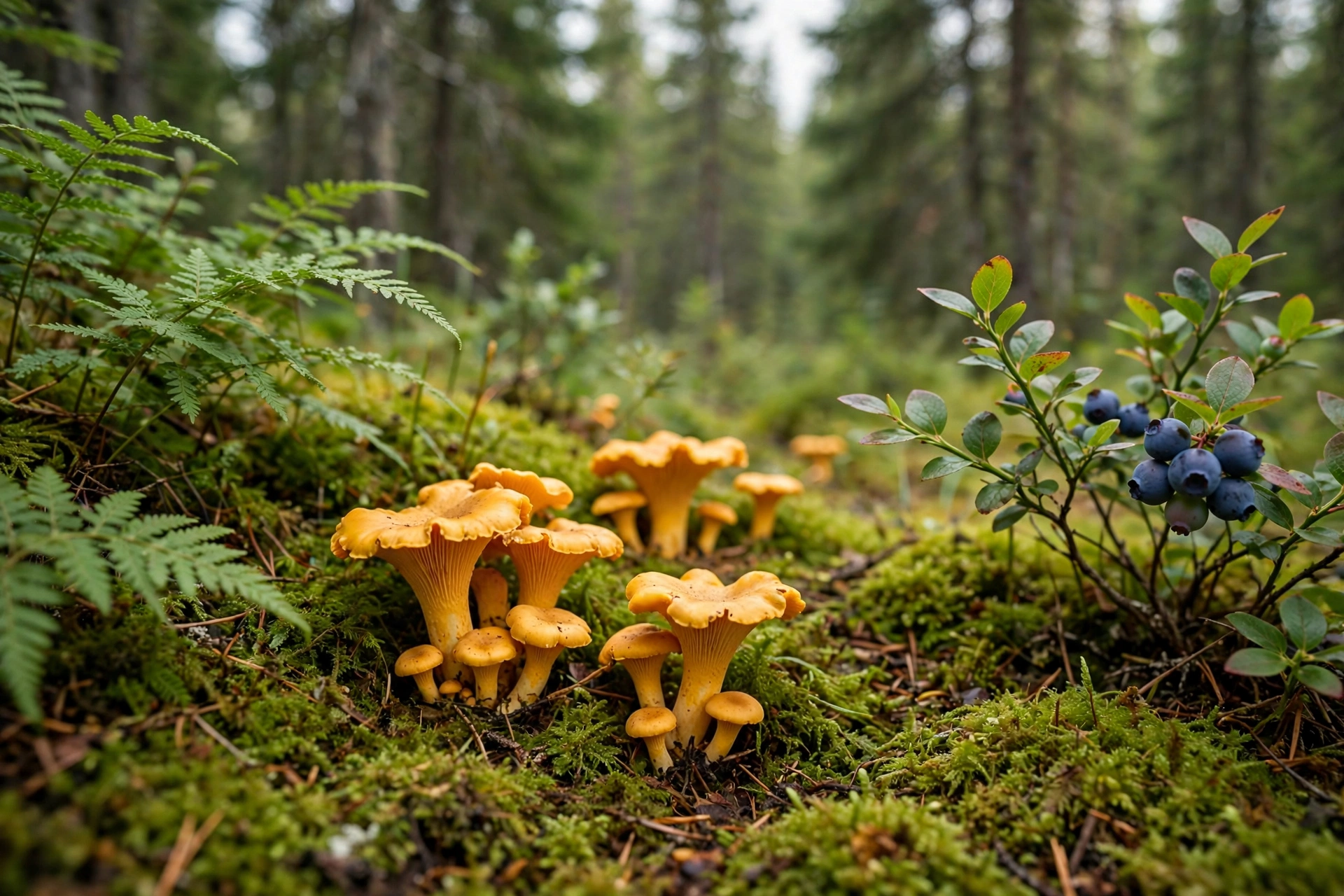
A chanterelle announces itself honestly if you know the whole cluster of signs: golden to egg-yolk yellow, a solid stem that peels a little like string cheese, flesh that smells faintly of apricots, and — most important — blunt, forked ridges running down the stem instead of thin, blade-like gills. It grows singly or in loose troops from the ground in mossy conifer and mixed woods, never in dense clusters on wood.
Know the lookalikes before you know the prize. The jack-o’-lantern grows clustered on wood or roots and carries true thin gills, and the false chanterelle is duller, browner, and less fragrant. When in doubt, leave it out — and get an in-person identification from an experienced local forager or your provincial mycological society before anything reaches a pan. No website, including this one, can identify the mushroom in your hand.